

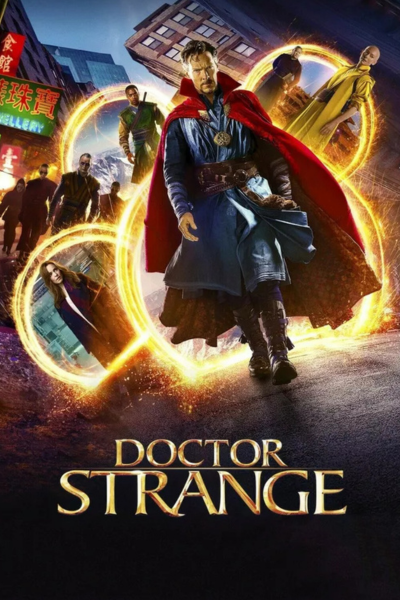


Doctor Strange is a 2016 superhero film directed by Scott Derrickson and produced by Marvel Studios. It is part of the Marvel Cinematic Universe (MCU) and introduces the character Dr. Stephen Strange, a skilled neurosurgeon who transforms into a powerful sorcerer. The film combines elements of action, fantasy, and mysticism, setting itself apart from other superhero films with its focus on alternate dimensions, magical powers, and mind-bending visuals.
Plot Overview
The story follows Dr. Stephen Strange (Benedict Cumberbatch), a talented but arrogant neurosurgeon whose life takes a drastic turn after a car accident severely injures his hands, making him unable to perform surgeries. Desperate to heal himself, Strange exhausts traditional medical treatments and eventually seeks alternative solutions. His search leads him to Kamar-Taj, a mysterious sanctuary in Nepal where he meets the Ancient One (Tilda Swinton), a powerful sorcerer who introduces him to the world of mystic arts.
Under the Ancient One’s guidance, Strange begins his training in magic, learning to harness mystical energy and access alternate dimensions. As he learns, he discovers that Kamar-Taj is also a secret order tasked with protecting Earth from supernatural threats. Strange soon finds himself caught up in a battle against Kaecilius (Mads Mikkelsen), a former disciple of the Ancient One who seeks to bring the Dark Dimension, ruled by the malevolent entity Dormammu, to Earth to gain immortality.
As Strange grapples with his new identity, he faces moral dilemmas about power and sacrifice, ultimately stepping up to defend Earth, not with the skills of a doctor, but as a sorcerer and protector.
Characters
- Dr. Stephen Strange (Benedict Cumberbatch): An accomplished yet egotistical neurosurgeon whose life changes drastically after an accident. Strange’s journey from cynic to sorcerer serves as the core of the film, and his character arc explores themes of humility, self-discovery, and responsibility.
- The Ancient One (Tilda Swinton): A powerful and enigmatic mystic who mentors Strange. She introduces him to the mystic arts and the idea of defending the universe from dark forces. Her wisdom, coupled with her controversial use of dark magic, adds complexity to her character.
- Karl Mordo (Chiwetel Ejiofor): A senior student of the Ancient One and a devout sorcerer who aids Strange in his training. Mordo believes in strict adherence to magical rules and is deeply troubled by the Ancient One's secrets, setting up potential conflicts.
- Kaecilius (Mads Mikkelsen): A former follower of the Ancient One who rebels against her teachings. He seeks eternal life by bringing Dormammu and the Dark Dimension to Earth, believing it to be a path to immortality and freedom from suffering.
- Christine Palmer (Rachel McAdams): A skilled doctor and Strange’s former romantic partner who becomes a source of support during his journey. Though she remains grounded in the medical world, her character provides a link to Strange's past and humanity.
Themes
- Ego and Transformation: Strange’s journey from a self-centered surgeon to a selfless protector is central to the film. His transformation challenges the concept of power as a means of personal achievement, showing how true strength lies in serving others rather than oneself.
- Reality and Perception: Doctor Strange explores how perception can shape reality. Through his training, Strange learns to access alternate dimensions and expand his consciousness. The film’s visuals mirror this theme, as scenes morph and fold to convey his changing understanding of reality.
- Sacrifice and Responsibility: Strange’s commitment to protect the world comes at a personal cost, challenging him to put others’ safety above his desires. The film also examines the moral sacrifices required to wield great power, embodied by both the Ancient One and Strange as they confront the risks of their choices.
- Science and Mysticism: The film juxtaposes Strange’s scientific background with the mystical teachings of the Ancient One, symbolizing the balance between rational thought and faith in the unknown. This theme reflects Strange’s initial skepticism and his eventual acceptance of realms beyond human understanding.
- Mortality and Time: Kaecilius’s obsession with immortality contrasts with the Ancient One’s teachings about life’s natural cycle. Strange’s encounter with Dormammu also reinforces the value of time, as he chooses to trap himself in an endless loop rather than seek personal gain, highlighting his growth.
Visuals and Cinematography
Doctor Strange is notable for its groundbreaking visuals, which introduce audiences to mystical dimensions and spells in ways that are both awe-inspiring and surreal. The film incorporates heavy CGI and kaleidoscopic effects that warp and bend reality, a visual style inspired by the comic book's original artist, Steve Ditko.
Key sequences include the iconic “mirror dimension,” where buildings and streets twist and rotate in fractal patterns, and the multiverse journey, where Strange's consciousness is thrust through an array of bizarre and otherworldly dimensions. These visuals are essential in conveying the magical realm’s limitless possibilities and give the film a distinct aesthetic among other MCU movies.
Reception and Criticism
Doctor Strange was well-received by critics and audiences, especially for its originality within the MCU and Benedict Cumberbatch’s compelling portrayal of the titular character. The film’s visual effects and imaginative take on the multiverse were widely praised, bringing a fresh, mind-bending quality to the superhero genre. Tilda Swinton’s performance as the Ancient One was also lauded, although the casting was met with some controversy due to the character's East Asian origins in the comics.
Some criticism was directed at the film’s pacing and relatively formulaic plot, as certain elements echoed familiar MCU tropes. Additionally, while Kaecilius serves as an adequate antagonist, some viewers felt he was underdeveloped, fitting the pattern of other “one-dimensional” Marvel villains.
Legacy and Impact
Doctor Strange has become a significant entry in the MCU for its introduction of magic and alternate realities, setting up major concepts that would play crucial roles in later films, such as Avengers: Infinity War and Avengers: Endgame. It also paved the way for exploring the multiverse, an idea expanded in Doctor Strange in the Multiverse of Madness (2022) and other MCU projects. The character of Dr. Strange quickly became a fan favorite, with his unique abilities and moral complexities adding depth to the ensemble of Marvel heroes.
The film has had a lasting impact on the superhero genre, merging fantasy and superhero narratives and expanding the boundaries of what a superhero film can look like visually and thematically. By focusing on mystical realms and complex existential questions, Doctor Strange has inspired audiences and filmmakers to explore stories that blend action with spiritual and philosophical themes.
Conclusion
Doctor Strange is a visually stunning and thought-provoking film that brings a fresh perspective to the Marvel Cinematic Universe. Its blend of magic, mind-bending visuals, and introspective themes set it apart as one of Marvel’s more unique origin stories. Through Stephen Strange’s journey from an arrogant surgeon to a selfless sorcerer, the film reminds viewers of the importance of humility, sacrifice, and the unknown realms of possibility, both in the MCU and beyond.